
01
Equipment Foundations
Machine bases and plinths set out, poured and surveyed to erection tolerance.
Civil contracting experience reaching back to the early 1970s.
FEPL has extensive civil contracting experience dating back to the early 1970s. The work covers foundations, buildings, temporary accommodation facilities and pipelines at power plants.
Alongside industrial work, the company delivers multipurpose building projects and is currently involved in multiple real estate housing and infrastructure projects covering roads, sewerage, over-head tanks, building works and electrification across the country.
Industrial civil work is unforgiving: an equipment foundation that is out of tolerance is discovered late, by the erection crew, at the worst possible moment. Setting out, pour quality and as-built survey are treated as part of the job, not paperwork after it.
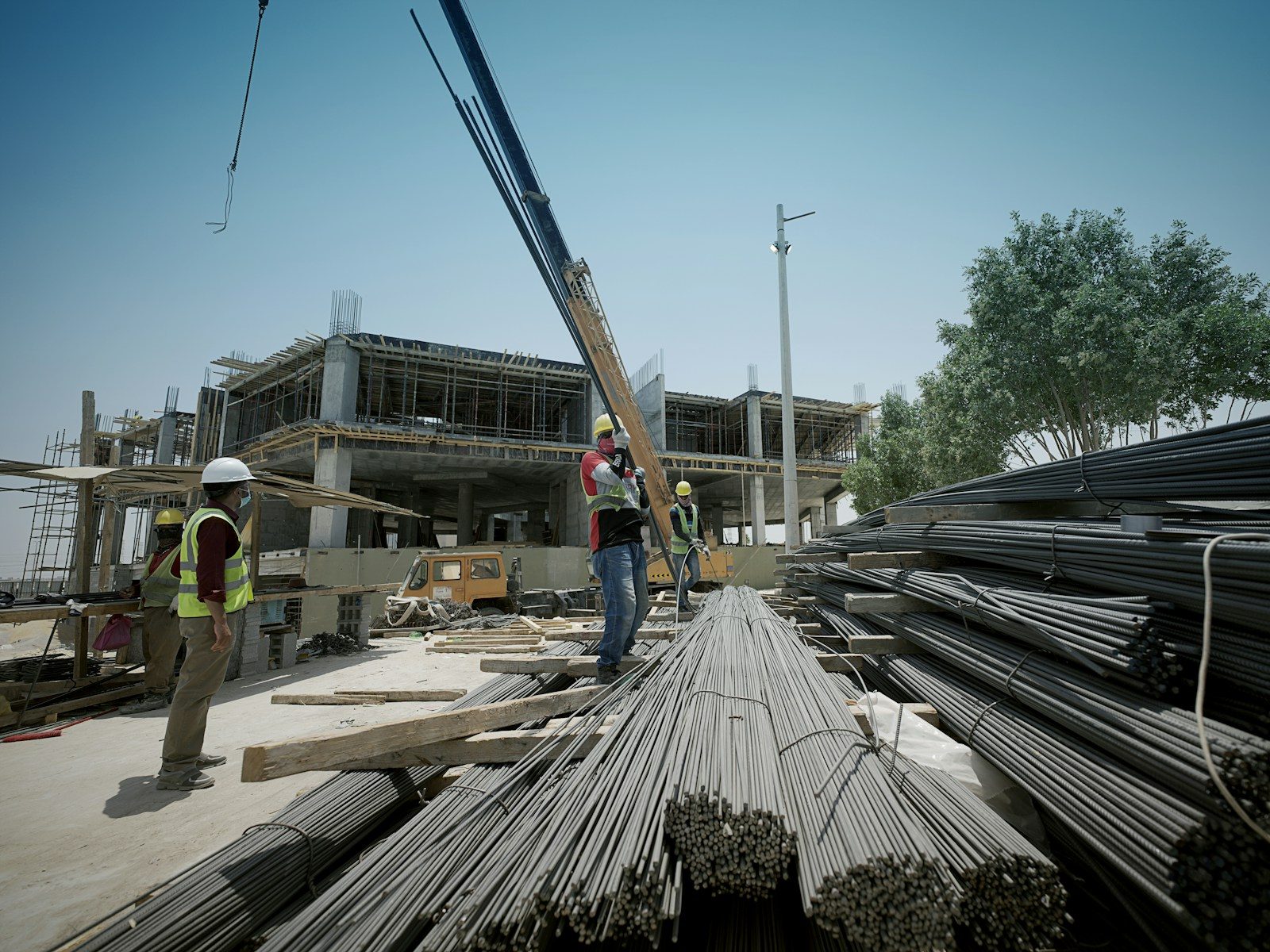
Machine bases and plinths set out, poured and surveyed to erection tolerance.
Civil and structural works for power generation facilities.
Vertical development, from substructure through to structural frame.
Housing scheme development including roads, sewerage and services.
Site accommodation, offices and welfare facilities for project durations.
Buried pipework, ducts, drainage and associated civil works.
Every Civil Construction job follows the same four stages, with one team accountable for all of them.
A site visit and a clear written scope — what is included, what is not, and what we need from you to start.
Programme, method statements, manpower, tooling and materials lined up before the first day on site.
Daily supervision, progress tracking and quality checks against the agreed inspection and test plan.
Testing, documentation and a clean handover — with technical support afterwards if you need it.
Industrial sites are unforgiving places to cut corners. The way we work is built around two things: everyone going home safely, and work that never has to be done twice.
Method statements and risk assessments are prepared for the task in hand, reviewed with the crew and kept at the workface — not filed away in an office.
Isolations, hot work, confined spaces and work at height are controlled through a permit system and signed off before anyone starts.
Each shift starts with a short briefing on the day's work and its hazards, so everyone on the job knows the plan and the risks.
Hold and witness points are agreed up front, so quality is checked as the work proceeds rather than discovered at handover.
Supervisors and technicians are trained for the work they do, backed by the group's own in-house technical training facility.
Test sheets, inspection reports and as-built information are compiled as the work goes, and handed over in a usable form.
Tell us what you need and our team will come back to you with a practical, costed way forward.
Talk to Our Team